
Is Interreviewed.com Safe? A Detailed Review You Should Read First

Author: Adam Collins
In a Nutshell:
- Interreviewed.com doesn't really show clear scam behavior or obvious fraud signs
- The site uses a Gmail contact, which is not very professional for a “news” website
- Some partner websites sound very familiar to big media names, which can confuse reader
- Social media links are strange and not what most people expect from news site
- The content looks more informational and SEO-focused
- Overall, it's not a proven scam, but exercise caution when dealing with info or pages on Interreviewed.com
If you’ve landed on Interreviewed.com, you’re probably wondering one simple thing: Is this site legit, or should I be worried?
Fair question, especially in a time when “news websites” pop up daily and not all of them are built with trust in mind.
Interreviewed.com presents itself as a fast-growing online publication covering everything from tech and games to world news and entertainment. On the surface, it looks like just another blog. But once you dig a little deeper, a few things stand out — not necessarily as red flags, but definitely as pause-and-think moments.
Let’s break it down.
What is Interreviewed.com?
According to its own description, InterReviewed claims to be:
“The fastest emerging news website covering all the latest news, World News, Entertainment, APK, Tech, Game, and more.”
That’s a very wide content range. Sites that try to cover everything usually rely on quick publishing rather than deep reporting, which isn’t illegal or uncommon, but
Contact Details That Raise Eyebrows (But Not Alarms)
One of the first things people check when judging a website’s legitimacy is its contact information.
Interreviewed.com lists this email address:
nhanh5545@gmail.com
Now, let’s be fair:
- A Gmail address does not automatically mean a scam
- Plenty of small blogs and independent publishers use free email services
However…
- Established news platforms usually use a domain-based email
- A generic Gmail address doesn’t inspire strong trust, especially for a “news” brand
So while this isn’t proof of wrongdoing, it does lower the site’s credibility score.
Connections to Other Websites That Feel… Familiar
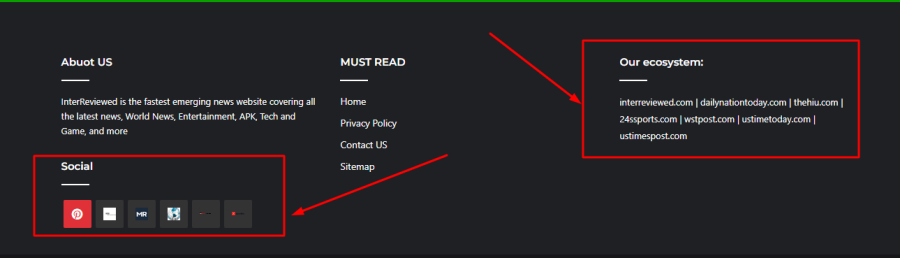
Interreviewed.com claims to be part of a wider ecosystem of sites, including:
- dailynationtoday.com
- thehiu.com
- 24ssports.com
- wstpost.com
- ustimetoday.com
- ustimespost.com
If those names feel oddly familiar, you’re not imagining it.
Many of them resemble well-known publications or existing media brands. That doesn’t make them illegal — but it does raise an important question:
Are these names designed to sound trustworthy by association?
There’s no direct evidence of impersonation here, but the similarity alone is enough to justify caution.
Social Media Buttons That Feel Out of Place
Most news websites link to platforms like:
- X (Twitter)
Interreviewed.com, however, highlights: Pinterest, Crunchbase, ScamAdviser, among others. This is… unusual.
Again, unusual doesn’t mean unsafe — but it is unexpected. Especially the inclusion of ScamAdviser as a featured button, which most sites don’t openly promote unless they’re actively trying to appear transparent.
Content Quality and Purpose
Interreviewed.com publishes a high volume of short, SEO-style articles across unrelated topics. This suggests the site may be built primarily for: Search traffic, Affiliate clicks, and/or Ad revenue
That doesn’t make it dangerous — but it does mean you shouldn’t treat its content as expert advice, especially for: Financial decisions, Downloads and APK files, or Anything asking for personal information
Are the Grammatical Errors a Cause of Concern?
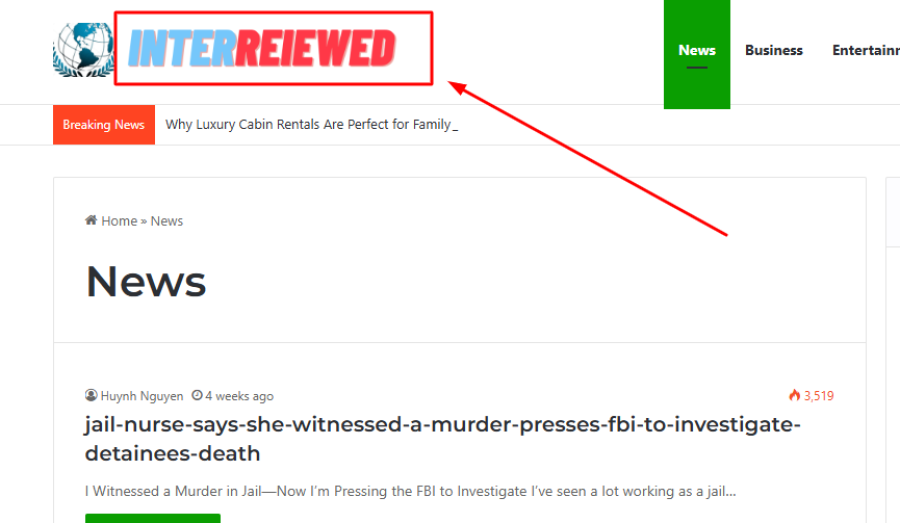
Yes, they’re worth noting. We spotted several basic mistakes, including the site header reading “Interreiewed” instead of Interreviewed, and “Abuot Us” instead of About Us. These errors appear in prominent areas, which suggests limited editorial checks.
Grammatical mistakes alone don’t mean a site is a scam, but they do hurt credibility — especially for a website claiming to be a news platform. When combined with other oddities, they’re another reason to stay cautious.
Bottom Line: Is Interreviewed.com a Scam?
No clear evidence suggests that Interreviewed.com is a scam.
That said, it also doesn’t tick all the boxes of a highly trustworthy or authoritative website.
Think of it as:
- A content-driven blog
- A site that should be approached with healthy skepticism
Overall:
- Don’t share personal or financial details
- Be extra cautious if redirected to offers, downloads, or payment pages
FAQs About Interreviewed.com
Is Interreviewed.com legit?
It appears to be a real website publishing content, but it lacks strong credibility signals typical of trusted news outlets.
Is Interreviewed.com safe to browse?
Yes, browsing articles is generally safe. Just avoid clicking on suspicious ads or external offers.
How do I check if it’s a scam?
Look for clear contact details, real company info, and obvious red flags like typos or pressure to act fast. Or better yet, check on ScamAdviser.com
How can I verify a scam?
Search for reviews, check the domain age, and see what trusted scam-checking sites say.
How can you tell if a scammer is real?
If they rush you, hide details, or ask for personal info, it’s time to be cautious.
This article has been written by a scam fighter volunteer. If you believe the article above contains inaccuracies or needs to include relevant information, please contact ScamAdviser.com using this form.
Report a Scam!

Have you fallen for a hoax, bought a fake product? Report the site and warn others!
Scam Categories
Help & Info
Top Safety Picks
Your Go-To Tools for Online SafetyDisclaimer: Some of the links here are affiliate links. If you click them and make a purchase, we may earn a commission at no extra cost to you.
- ScamAdviser App - iOS : Your personal scam detector, on the go! Check website safety, report scams, and get instant alerts. Available on iOS
- ScamAdviser App - Android : Your personal scam detector, on the go! Check website safety, report scams, and get instant alerts. Available on Android.
- NordVPN : NordVPN keeps your connection private and secure whether you are at home, traveling, or streaming from another country. It protects your data, blocks unwanted ads and trackers, and helps you access your paid subscriptions anywhere. Try it Today!
- Incogni : Incogni automatically removes your personal data from data brokers that trade in personal information online, helping reduce scam and identity theft risks without the hassle of manual opt-outs. Reclaim your privacy now!
Popular Stories
As the influence of the internet rises, so does the prevalence of online scams. There are fraudsters making all kinds of claims to trap victims online - from fake investment opportunities to online stores - and the internet allows them to operate from any part of the world with anonymity. The ability to spot online scams is an important skill to have as the virtual world is increasingly becoming a part of every facet of our lives. The below tips will help you identify the signs which can indicate that a website could be a scam. Common Sense: Too Good To Be True When looking for goods online, a great deal can be very enticing. A Gucci bag or a new iPhone for half the price? Who wouldn’t want to grab such a deal? Scammers know this too and try to take advantage of the fact. If an online deal looks too good to be true, think twice and double-check things. The easiest way to do this is to simply check out the same product at competing websites (that you trust). If the difference in prices is huge, it might be better to double-check the rest of the website. Check Out the Social Media Links Social media is a core part of ecommerce businesses these days and consumers often expect online shops to have a social media presence. Scammers know this and often insert logos of social media sites on their websites. Scratching beneath the surface often reveals this fu
Disclaimer: This article was originally published in 2018 and has been updated in October 2025 to reflect more current information, resources, and advice. Scams and recovery options continue to evolve, so always double-check with your bank, payment provider, or local consumer protection authority for the latest guidance. So the worst has come to pass - you realise you parted with your money too fast, and the site you used was a scam - what now? Well first of all, don’t despair!! If you think you have been scammed, the first port of call when having an issue is to simply ask for a refund. This is the first and easiest step to determine whether you are dealing with a genuine company or scammers. Sadly, getting your money back from a scammer is not as simple as just asking. If you are indeed dealing with scammers, the procedure (and chance) of getting your money back varies depending on the payment method you used. PayPal Debit card/Credit card Bank transfer Wire transfer Google Pay Bitcoin PayPal Good news: PayPal gives you strong protection. You can file a dispute within 180 days of your purchase. You can get a refund if: Your order never arrives, and the seller cannot provide proof of delivery. The scammer sends you something completely different (e.g., a controller instead of a PlayStation). The product condition was misrepresented (sold as new but arrives used). The item is missing undisclosed parts. The item is counterfeit. Start your claim directly through Pay